
UX Design Certificate
Live UX design certificate program in user research, Figma, and human-centered design
Learn the full UX design process, from user research and personas to wireframes, prototypes, and usability testing in Figma, in a small live online cohort led by an active UX practitioner. Build a portfolio in every module and finish with a UX case study presented live. No design experience needed.
- Training careers nationwide since 2006
- 100% live instruction, never recordings
- WIOA and DVR funding eligible
Program snapshot
SCHEDULE
Upcoming Classes
Each cohort meets live on Zoom three times per week on a set schedule. Reserve your seat early: cohorts are kept small, and funding approvals such as WIOA take time.
-
Start Date Oct 19, 2026End Date Apr 14, 2027Tuition From $6,995.00ScheduleM/W/Th, 5:00pm to 8:00pm MT (7pm to 10pm ET)
-
Start Date Jan 11, 2027End Date Jun 30, 2027Tuition From $6,995.00ScheduleMon / Wed / Thu, 5:00 to 8:00pm MT (7:00 to 10:00pm ET). No class Jan 18, Feb 15, Mar 15 to 19, or May 31 to Jun 4.
Neither date works for you? Contact Admissions and we will notify you as soon as the next cohort is scheduled.
Next cohort dates coming soon
Tell us when you would like to begin and we will notify you as soon as that cohort opens.
Request program informationCurriculum
What the UX design certificate covers in 198 hours
The curriculum follows the actual UX design process from beginning to end. You start with research and discovery, the most overlooked and most important part of the job, then build through visual design, prototyping, design systems, and the technical and professional skills that make a UX designer effective inside a real product team. AI tools are woven throughout rather than treated as an afterthought.
Introduction to User Experience (UX) Design (36 hrs)
Outcome: explore the fundamentals of UX, build personas, journeys, and user flows, and start designing in Figma.
- Vocabulary, critique, and setting up Figma and Canva
- Discovery and research: user interviews, personas, and journey maps
- Competitive analysis, wireframes, user flows, and information architecture
- Intro to UI design, prototyping in Figma, and usability testing
Design Fundamentals (36 hrs)
Outcome: apply the principles of visual design, from grids and typography to color, composition, and accessibility.
- Designing on a grid, typography, and visual design
- Gestalt principles, color, and composition
- Intermediate UI and interaction design, low-fidelity vs. high-fidelity
- Responsive design, the mobile user mindset, and accessibility
Digital Project Design (36 hrs)
Outcome: work like a UX team with design systems, style guides, and UX writing, using AI to develop content, and complete your initial case study.
- Design systems, style guides, UI patterns, styles, and libraries
- Building Figma components and organizing projects
- UX writing, using AI to develop content, and working with images, animation, and video
- Project presentations, team critique, and your initial case study
Ways of Work (36 hrs)
Outcome: take an idea from sketch to mockup and present it the way design teams do inside real organizations.
- Project management, planning, and working with stakeholders
- Whiteboarding, Agile vs. Waterfall, design sprints, MVP, and prioritization
- The structure of creative teams and the business of design
- Storytelling, presentation, mockups, and Capstone work-in-progress critiques
Advanced Topics (36 hrs)
Outcome: work with technical teams using HTML and CSS fundamentals, AI in design, advanced testing, and advanced design systems.
- Working with technical team members and how the web works
- HTML and CSS fundamentals for designers, and AI in design
- Complex UI and forms, heat maps, surveys, and focus groups
- Advanced design systems, advanced prototyping in Figma, and project hand-off
Portfolios and Capstone Project (18 hrs)
Polish your portfolio and case study, prepare for design interviews and the job search with your instructor as mentor, and present your Capstone live with structured critique.
Lesson content and order may vary based on instructor approach and changes in the industry. Figma's free tier covers everything used in the program.
Who this is for
Who this UX design course is for

Career changers
Moving into UX or product design and need a structured path with real projects and real feedback, not a self-paced video library you abandon when you hit a wall. No prior UX or design software experience required.

Graphic designers
Already strong in visual design? Add the research, testing, and systems thinking that UX roles require, and learn to present design rationale in terms product teams act on.

Marketing and communications pros
Work closely with product teams? Understand the design process well enough to contribute to it rather than react to it. Your audience analysis skills overlap directly with UX research.

Why it works
Small live cohorts with an active UX practitioner
When you need to turn messy interview data into a clean affinity map, or present a design decision to a stakeholder who keeps asking for a different color, you get an answer from someone who has navigated it professionally. Small cohorts mean your research, wireframes, and prototypes get specific, actionable critique rather than a rubric score.
Career outcomes
UX design jobs and careers
UX hiring managers evaluate portfolios. You finish with research case studies, wireframes, interactive prototypes, usability testing reports, and a complete Capstone case study you can present and defend, plus career coaching to help you land the first role.
Career paths
UX design jobs and where this certificate leads
UX design sits at the intersection of technology, psychology, and communication. Technology companies, financial services firms, healthcare systems, e-commerce operations, government agencies, and nonprofits all hire UX designers, because every organization with a digital product has users whose experience it is either designing on purpose or creating by accident. Open each role below to see what the job involves and how the program prepares you.
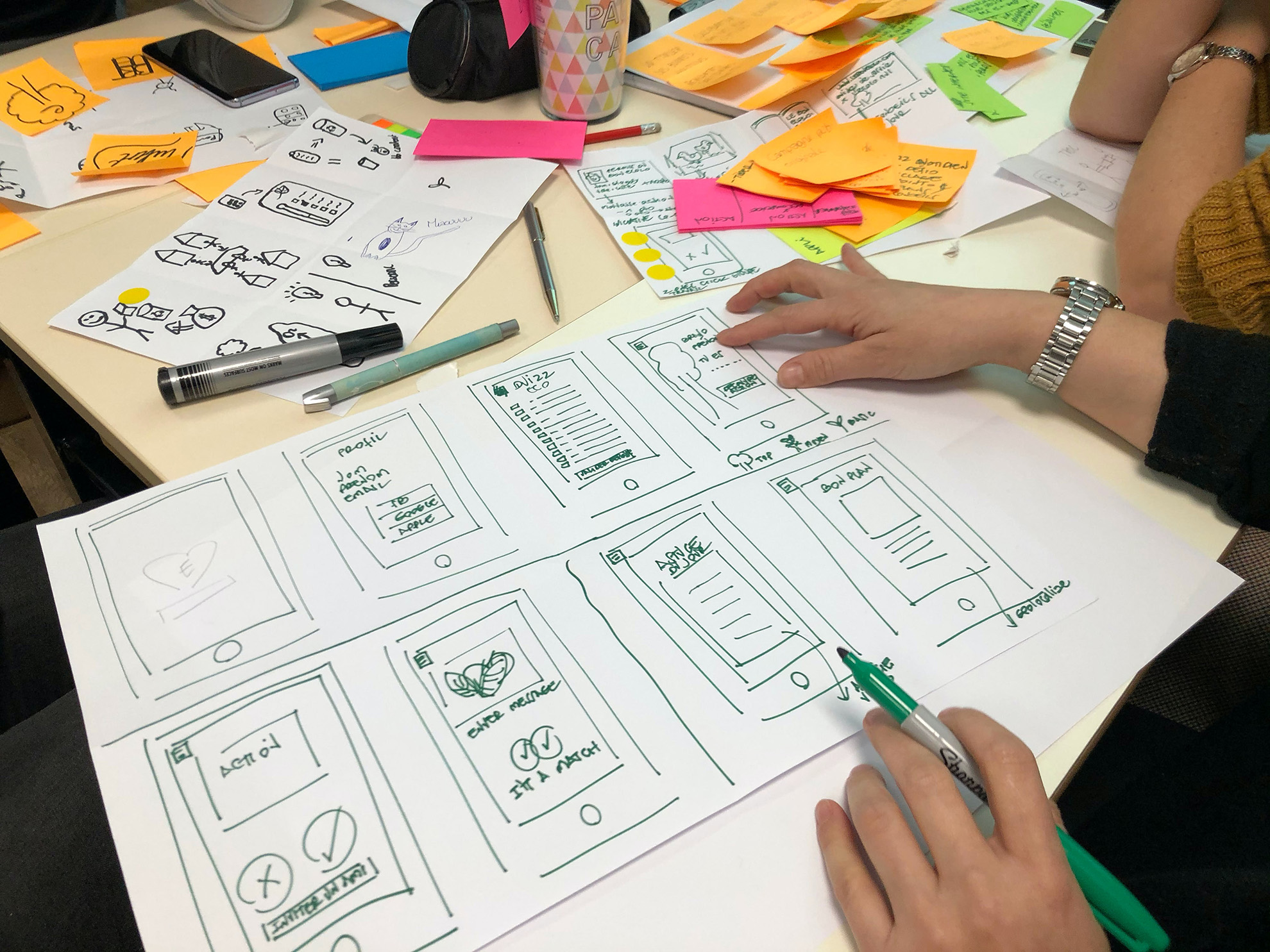
User Experience (UX) Designer
Plans, designs, and refines how a digital product works for the people who use it, from research and flows through wireframes, prototypes, and testing.
In this program: the full UX process from Module 1 on, with a complete case study in Module 6.
Product Designer
Combines technical knowledge and creative skills to help develop and test digital products, guiding design feasibility and the standards used to measure usability.
In this program: design systems, prototyping, and working with stakeholders and technical teams (Modules 3 to 5).
User Experience Researcher
Studies how people interact with digital products through interviews, usability tests, surveys, and analytics, then turns the findings into design improvements. Research is the most overlooked and most important part of UX work, and the program starts there.
UI Designer and Interaction Designer
Shapes the visual and interactive layer of a product: layout, typography, color, components, and how each screen responds to the user. Grids, Gestalt principles, accessibility, and interaction design are covered in Module 2.
Front-End Developer
Builds the visual, audio, and interactive features of websites and mobile apps. UX designers who understand HTML and CSS hand off work that ships faster, and some graduates add the Frontend Web Development Certificate to work on both sides.
Career progression: from junior designer to design lead
With experience and a portfolio that shows the full UX process from research through testing, designers move into senior UX designer, UX lead, design systems designer, UX manager, and head of product design roles.
The designers who advance fastest show their work in terms of outcomes: conversions that improved, support tickets that dropped, tasks users could finish that they could not before. The program builds both the portfolio and the case study narrative skills to present design decisions that way.
What employers look for in entry-level UX candidates
Candidates who can show the full UX process through well-documented case studies, conduct and synthesize user research, prototype and test in Figma, and explain their decisions clearly to non-design stakeholders are consistently more competitive than candidates who can only show visual design skills. This program is built to develop all of it.
AI and UX
How AI is changing UX design work
AI tools now reach every stage of the UX process. Figma's AI features generate prototypes from natural language prompts and suggest design options, FigJam AI drafts user flow diagrams, and research synthesis, heatmap analysis, and AI-assisted usability testing tools are becoming standard on product teams. Designers who use them well produce more research, more design variations, and more tested prototypes in less time.
AI makes good judgment faster; it does not replace it. A junior designer who cannot explain why a design serves the user will not produce better work because a tool generated the layout. Module 3 introduces AI tools for UX content and ideation, Module 5 covers AI in design as a dedicated topic, and throughout the program you learn when AI output is useful, when it is misleading, and how to take responsibility for the work that leaves your design file.

Tuition
UX design certificate cost
*Example only: $6,995 tuition less a $2,000 average scholarship, with the remaining $4,995 financed over 36 months at 13.99% APR, Climb's lowest current rate; $100 registration fee applies; subject to credit approval. Average award shown as an example only; scholarships are reviewed and awarded individually, and award amounts are not guaranteed. WIOA, DVR, and employer billing can also lower your cost.
Funding
Five ways to cover your tuition
CH
It was nice to be in a small class, but actually be close to people where we could talk and ask questions and provide feedback back and forth.
Clark H., DWC graduate
Included with tuition
Support every step of the way
Guidance from pre-enrollment to graduation, included for every student at no additional cost.
Admissions advisors
From pre-enrollment through your first day, an advisor walks you through program details, funding, and scheduling.
Instructor mentoring
Your instructor is your mentor before, during, and after class, helping you become industry-ready.
Student support
A dedicated student affairs manager helps you set up accounts, check your technology, and get class files.
Career coaching
Meet one-on-one with a career coach on your resume, LinkedIn, portfolio, job search, and interviews.
Tech support
Stuck mid-program? Reach tech support by Slack, email, or phone and get moving again.
Internships and alumni
Join the Parker Dewey micro-internship network for real project experience, plus the DWC alumni community.
Since 2006
Why DWC trains differently
DWC has delivered live, instructor-led career training nationwide since 2006. The UX Design Certificate is not a pre-packaged video course with a live session bolted on. It is a program built and refined for adults making a career transition, with instruction that fits around their lives and produces portfolio work UX hiring managers recognize as substantive.
Your instructor knows your professional background and frames feedback around your target roles and the products you want to work on. You graduate with the DWC UX Design Certificate, a professional certificate issued by Digital Workshop Center, with career coaching included to help you land the first role.

FAQ
UX design certificate questions, answered
Still curious? Attend a free info session or call 970-980-8091.
When does the next UX design cohort start?
The UX Design Certificate runs as a small live cohort on a set class schedule. Upcoming start dates, end dates, and session times (shown in MT and ET) are listed in the cohort schedule on this page, along with any planned breaks. If none of the dates work for you, contact admissions and we will notify you as soon as the next cohort is scheduled.
Do I need prior design experience or knowledge of Figma to enroll?
No. The program is designed for adults starting from scratch, and Figma is introduced in the very first session before you are expected to do anything with it. You need a computer, a reliable internet connection, a webcam, and a microphone. DWC walks every student through a technology check before the first session.
What tools will I use in this program?
Figma is the primary tool across all six modules for wireframing, prototyping, design systems, and developer hand-off. FigJam is used for whiteboarding, journey mapping, and collaborative research, and Canva for quick asset creation. AI tools for UX are covered in Modules 3 and 5, including AI-powered content and ideation tools and the AI features built into Figma. HTML and CSS fundamentals in Module 5 help you communicate with engineering teams. Every tool is free or has a free tier sufficient for the program.
How long is the program and how many hours per week does it require?
About 6 months: three live sessions per week, 3 hours each, for nine hours of live instruction per week and 198 total class hours. Plan additional time outside of sessions for research assignments, design iterations, and project work, bringing the typical weekly commitment to eleven to thirteen hours. Evening sessions make the program workable for people who are employed or job searching.
How much does the UX Design Certificate cost?
Tuition is $6,995, and it is your only program cost: no paid software is required because Figma's free tier covers everything in the curriculum. WIOA, DVR, scholarships, employer billing, and Climb Credit payment plans can lower your out-of-pocket cost.
Will I build a portfolio I can show employers?
Yes, and not a collection of tutorial screenshots. Portfolio work is built into all six modules: user research case studies, wireframes and interactive prototypes, usability testing reports, and design system components. The Capstone in Module 6 is a complete UX case study from research through final prototype, presented live with structured critique. The case study is the format UX candidates are evaluated on in hiring, and you will be able to present and defend yours in detail. Unlimited career coaching is included.
How is this different from a self-paced UX course or a design bootcamp?
Self-paced platforms deliver content with no live instruction and no one looking at your designs. Large bootcamps put one instructor in front of dozens of students. At DWC you attend scheduled sessions in a small cohort with an active UX practitioner who reviews your wireframes, prototype flows, and research synthesis in real time and tells you specifically what is working and what is not. The result is a portfolio that reflects a real design process and holds up in a UX interview.
What careers does this program prepare me for?
Graduates pursue entry-level and early-career roles including junior UX designer, UX researcher, UI designer, product designer, interaction designer, and digital product designer. The skills covered align with entry-level UX job postings across technology, healthcare, financial services, e-commerce, and government organizations, and grow with experience into senior, lead, and design systems roles.
What backgrounds transfer well into UX design?
UX is one of the few technical fields where experience from outside the field is valued rather than merely tolerated. Healthcare professionals bring patient experience insight, educators know how people learn and where they get frustrated, retail and hospitality workers bring consumer research instincts, and marketers bring audience analysis skills that overlap with UX research. The program is built for adults who have worked inside organizations and are ready to apply what they know to designing products that work better for people.
Is this program eligible for WIOA funding?
Yes. The UX Design Certificate is eligible for WIOA (Workforce Innovation and Opportunity Act) funding through local American Job Centers, with eligibility determined individually based on employment status and income. If approved, your case manager authorizes funding through an Individual Training Account, and DWC works directly with case managers, providing the program description, learning objectives, itemized tuition, the cohort schedule, and credential documentation. Apply early so funding is approved before your cohort starts. Start with our WIOA funding guide.
Can vocational rehabilitation or my employer pay for training?
Often, yes. State vocational rehabilitation (DVR) agencies fund training for people with documented disabilities who are working toward employment, and DWC coordinates documentation, scheduling, and progress reporting with your counselor. Employers that build digital products often pay for UX training because training an existing employee in research, prototyping, and usability testing costs less than hiring or contracting the work out. DWC invoices employers directly, and our guide on how to ask your employer to pay includes talking points and email templates.
Is there a scholarship for veterans?
Yes. The Next Mission Scholarship takes 80% off standard tuition for eligible U.S. veterans and qualifying active-duty service members within 180 days of separation. Eligibility requires verified veteran status (DD-214 or equivalent), separation within the past 7 years, and individual annual income between $30,000 and $75,000. Veterans outside that range may qualify for WIOA, VA Vocational Rehabilitation, or the Community Heroes Discount of 40% off.
What credential will I earn?
The DWC UX Design Certificate, a professional certificate issued by Digital Workshop Center, with full documentation of learning objectives and program outcomes for employers, workforce case managers, and DVR counselors. UX hiring is primarily portfolio-based rather than certification-based, so the program centers on a portfolio and case study that demonstrate the full UX process rather than on a specific exam.
Keep exploring
Related programs and classes
Reserve your seat in the next UX cohort.
Request program information and an admissions advisor follows up within one business day to confirm your cohort and sort out funding. You can also attend a free info session to meet an instructor and see student case study work first.
*Class start timing depends on enrollment and cannot be guaranteed. Monthly payment example: $6,995 tuition less a $2,000 average scholarship, with the remaining $4,995 financed over 36 months at 13.99% APR (Climb's lowest current rate); $100 registration fee applies; financing subject to credit approval. Scholarships are reviewed and awarded individually, and award amounts are not guaranteed. Cohort dates and times are subject to change. An advisor follows up within one business day.